

SCOTUS Rejects Higher Bar for Majority-Group Discrimination Claims

In a unanimous ruling, the justices of the Supreme Court of the United States sided with a heterosexual woman in a case about employment discrimination against a majority group, or people who are not part of a historically marginalized group. This decision unifies standards for all discrimination claims under Title VII of the Civil Rights Act.

The case involved an Ohioan named Marlean Ames, who alleged she was passed over for promotions and later demoted in favor of gay colleagues with less experience or education.  Ames sued under Title VII of the Civil Rights Act, which prevents employment discrimination based on protected classes like race, color, religion, sex, or national origin.


Lower courts had dismissed her claim under a stricter standard commonly used against majority-group plaintiffs, which required her to show unusual “background circumstances” that would suggest reverse discrimination.

In its ruling, the Supreme Court dismissed the use of the “background circumstances” requirement for majority-group plaintiffs.


Justice Ketanji Brown Jackson wrote for the court, “Title VII’s disparate treatment provision draws no distinctions between majority-group plaintiffs and minority-group plaintiffs.” This means that courts cannot apply a different, or stricter, legal standard for plaintiffs simply because they belong to a majority group. Discrimination protections apply equally to all individuals.


In a concurring opinion for the court, Justice Clarence Thomas discussed how it can be difficult to identify who is a member of the “majority.”


He wrote, “Women, for example, make up the majority in the United States as a whole, but not in some states and counties. Similarly, women make up the majority of employees in certain industries, such as teaching and nursing, but the minority in other industries, such as construction.”


Employers must now apply the same legal standards to all claims, regardless of the plaintiff’s group identity. With the “background circumstance” rule gone, all employees are entitled to the same standard under Title VII of the Civil Rights Act, prohibiting discrimination based on a protected class. Discrimination prevention training for managers and a thorough review of employment decisions and any discrimination claims are critical for remaining compliant under Title VII.

Recent Posts

Main street in Lexington, KY
By Lockaby PLLC • November 6, 2026
The process of selling a business can be overwhelming. Understanding the process can be helpful for business owners looking for an M&A attorney for their transaction
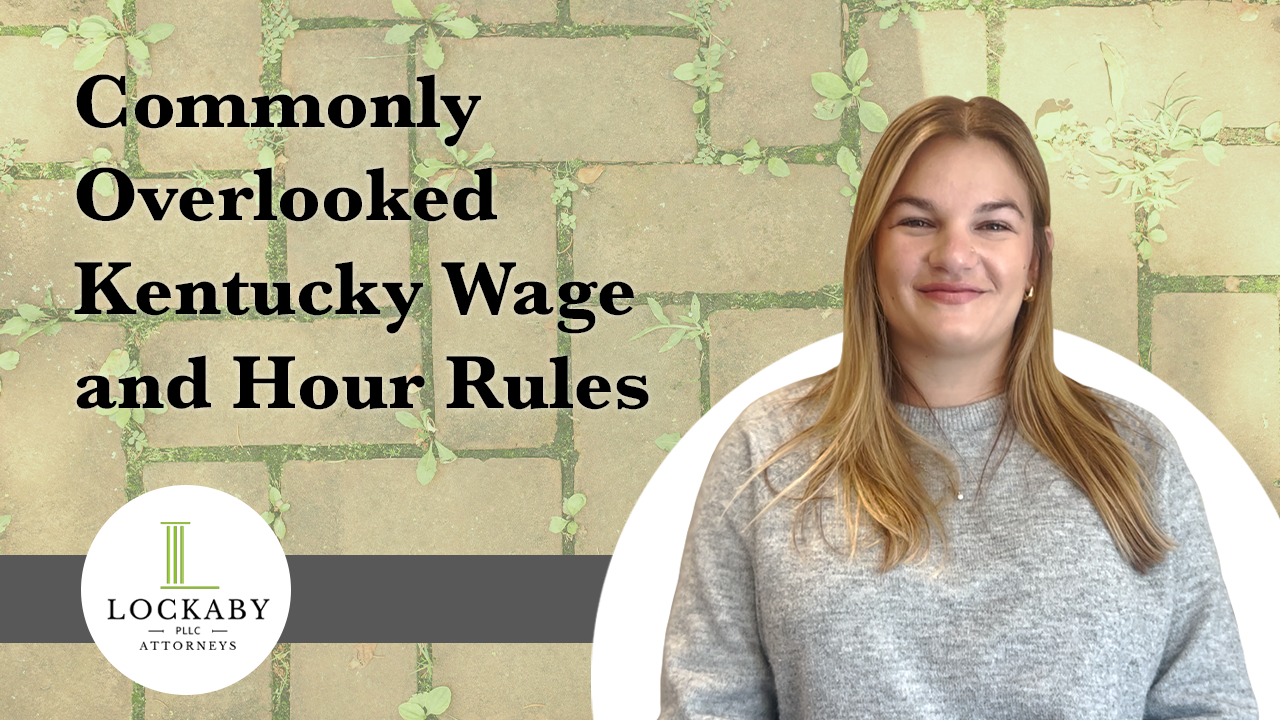
Abby Wearden, title Commonly Overlooked Kentucky Wage and Hour Rules
By Lockaby PLLC • November 3, 2026
Commonly overlooked wage and hour rules in Kentucky, like payroll mistakes, can compound into bigger problems when they affect multiple employees over time.

One half with a typewriter, rotary phone and notebook. The other half laptop, phone, and tablet
By Lockaby PLLC • October 28, 2026
Dolly Parton's 9 to 5 was released over 40 years ago, but it is a great reminder for modern employers about what can happen when workplace problem goes unaddressed.

Abby Wearden in front of building with text religious accommodations and artificial intelligence
By Lockaby PLLC • October 27, 2026
Are employees able to ask for religious accommodations from using artificial intelligence at work? Our YouTube video discusses this and employer obligations

Picture of a red traffic light with a brick building and blue sky in the background.
By Lockaby PLLC • October 22, 2026
Butterball agreed. to pay $230,000 in an ADA settlement with the EEOC. What can employers learn from this case? Read our blog to find out! Questions? Contact us!

Abigail Wearden in front of a building, Title: What is a Performance Improvement Plan?
By Lockaby PLLC • October 12, 2026
Performance improvement plans can help employers address performance problems. What should employers consider before introducing a PIP?

Horse statue with fountain in the background
By Lockaby PLLC • October 2, 2026
Payroll errors don't have to be intentional to create significant liability. What can employers learn from DoorDash's recent settlement with New York City?

Street with trees and brick buildings
By Lockaby PLLC • September 25, 2026
The Second Circuit Court of Appeals shifts the focus in religious accommodations cases from process to motive. Read our blog to learn more!

Man with glasses speaking, text in background
By Lockaby PLLC • September 23, 2026
A purchase agreement turns the framework of an M&A transaction into a binding contract between the parties. Watch this video to learn the ins and outs!

Brick exterior of a house with decorative rails around a porch
By Lockaby PLLC • September 18, 2026
Have you ever wondered how M&A financing works? Read our latest blog to understand the difference between cash, debt, and equity financing in M&A transactions.

Show More