
Lessons for Employers from Butterball's $230,000 ADA Settlement

Butterball, LLC, is a North Carolina based poultry processing company known best for their Thanksgiving turkeys. In September 2026, the United States Equal Employment Opportunity Commission (EEOC) announced that Butterball had agreed to pay a $230,000 settlement and to take other steps to resolve a disability discrimination lawsuit.

What Happened?

According to the EEOC’s lawsuit, a long-term Butterball employee informed the company that she had cancer and needed intermittent leave for chemotherapy and recovery. Butterball referred her to a third-party benefits administrator, but the leave was never granted.

The employee received attendance points for treatment-related absences, and she was ultimately fired for violating the company’s attendance policy.


The EEOC alleged that Butterball failed to accommodate the employee and discriminated against her because of her disability. The agency filed suit in the U.S. District Court for the Eastern District of North Carolina after attempting to resolve the matter through its administrative process.


One issue stands out—Butterball referred the employee to a third-party administrator who did not grant the leave, and she accrued attendance points for cancer-related absences. The consent decree resolving the lawsuit reinforces that employers remain responsible for ADA compliance, even when a third-party handles leave administration.

Butterball's New Responsibilities

Under the two-year consent decree, Butterbal will pay $230,000 and make modifications to its accommodation process. It must now:


  • Maintain effective procedures for receiving and processing ADA accommodation requests.
  • Provide leave policies to employees in English, Spanish, and Haitian Creole
  • Designate a liaison to facilitate communication and help employees submit requests or claims to the third-party administrator.
  • Train HR and benefits employees on the ADA
  • Provide reports to the EEOC

What Employers Can Takeaway

The ADA requires leave or a schedule change as a reasonable accommodation, unless providing it would create undue hardship. For employers, this case serves as a reminder to check that:

  • Employees and supervisors know how to raise a possible accommodation request
  • Someone internally tracks requests sent to an outside administrator and follows up on delays
  • HR reviews potentially disability-related absences before attendance points lead to discipline or termination
  • Leave policies are understandable to the workforce, and staff who receive requests now how handle them


An attendance policy should not be the final word when an employee’s absences may be related to a disability. Employers should make sure a request receives appropriate review before the policy drives a disciplinary action.


Leave requests can involve several people and systems, but the employer remains responsible for making sure it receives timely, thoughtful review. Employers should confirm that accommodation requests are tracked, delays are addressed, and any potential disability-related absences are reviewed before discipline is imposed.


Did you know Lockaby PLLC advises employers and small to mid-sized businesses on leave policies, ADA accommodation procedures and other workplace decisions? Contact our team to learn more!

Recent Posts

Abigail Wearden in front of a building, Title: What is a Performance Improvement Plan?
By Lockaby PLLC • October 12, 2026
Performance improvement plans can help employers address performance problems. What should employers consider before introducing a PIP?

Horse statue with fountain in the background
By Lockaby PLLC • October 2, 2026
Payroll errors don't have to be intentional to create significant liability. What can employers learn from DoorDash's recent settlement with New York City?

Street with trees and brick buildings
By Lockaby PLLC • September 25, 2026
The Second Circuit Court of Appeals shifts the focus in religious accommodations cases from process to motive. Read our blog to learn more!

Man with glasses speaking, text in background
By Lockaby PLLC • September 23, 2026
A purchase agreement turns the framework of an M&A transaction into a binding contract between the parties. Watch this video to learn the ins and outs!

Brick exterior of a house with decorative rails around a porch
By Lockaby PLLC • September 18, 2026
Have you ever wondered how M&A financing works? Read our latest blog to understand the difference between cash, debt, and equity financing in M&A transactions.

Matt Lockaby discussing the parts of the letter of intent for a merger or acquisition.
By Lockaby PLLC • September 16, 2026
What is the Letter of Intent? Watch our latest YouTube video where Matt Lockaby breaks down this important document found in every M&A or business transaction.

Stonework on a building done in limestone
By Lockaby PLLC • September 1, 2026
For businesses, using AI in the workplace is common. Employers need to know what to include in an AI policy for their workplace. Read our blog to learn more.
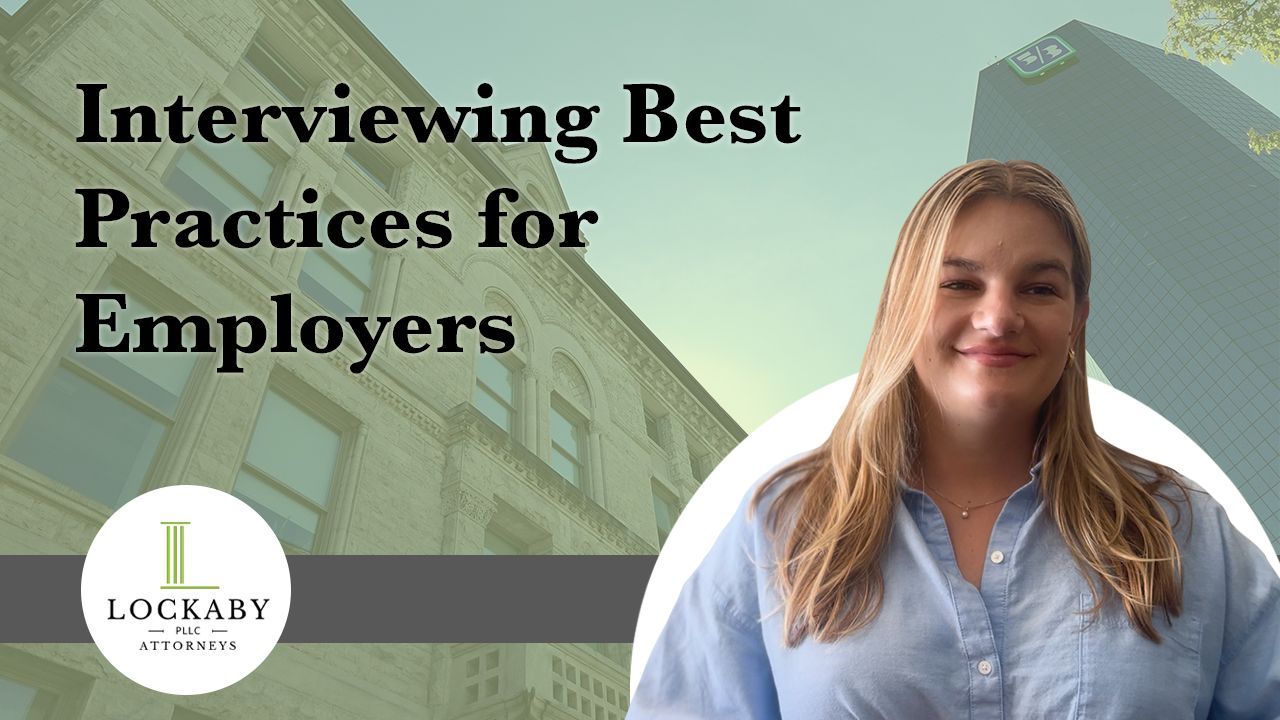
Interviewing Best Practices with Abigail Wearden
By Lockaby PLLC • August 24, 2026
What are common interview mistakes employers should avoid? What can you ask in an interview? Watch our video now to learn more about interviewing best practices!
A statue of a horse outside triangle park in Downtown Lexington
By Lockaby PLLC • August 21, 2026
Two new DOL opinion letters clarify when employee travel is an ordinary commute and when it becomes compensable work time under the FLSA. Read on to learn more.

By Lockaby PLLC • August 6, 2026
Due diligence helps buyers identify any hidden liabilities that could affect the value of the business. Read our blog to learn about five common liabilities.

Show More